EDGES
Marks that cross the border
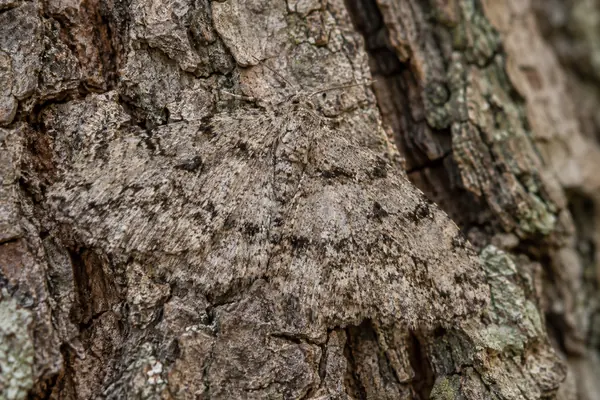
In Bristol's field test, paper moths with markings overlapping their edges survived better than all the other designs, including plain ones.
Check a pattern techwearprints
WHAT THE EXPERIMENTS FOUND
A bold pattern can hide a shape better than a plain colour.
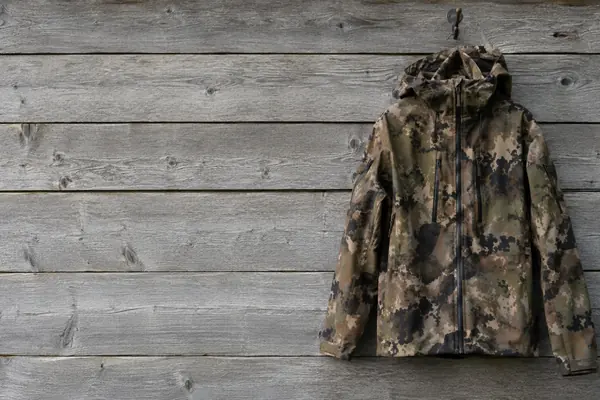
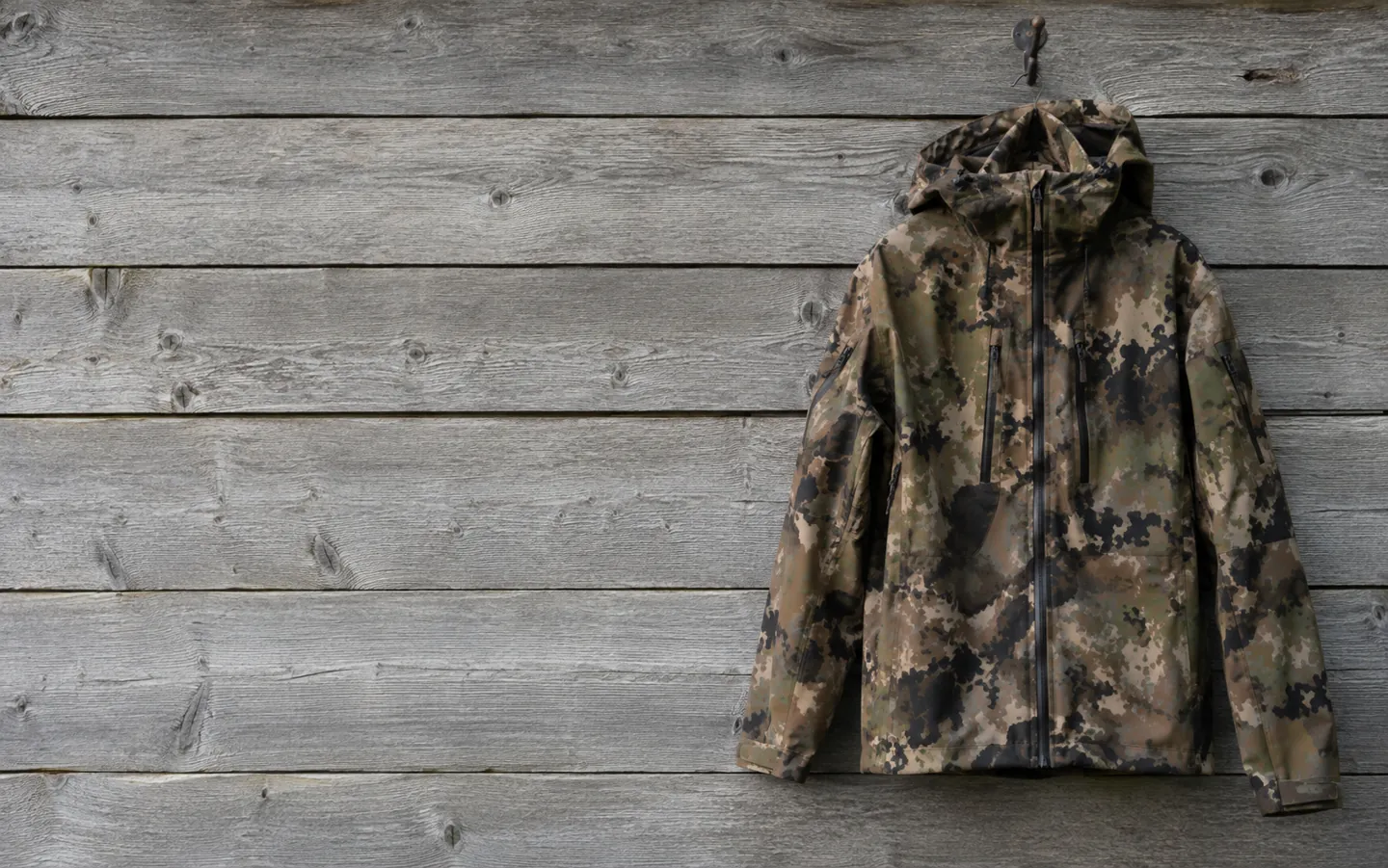
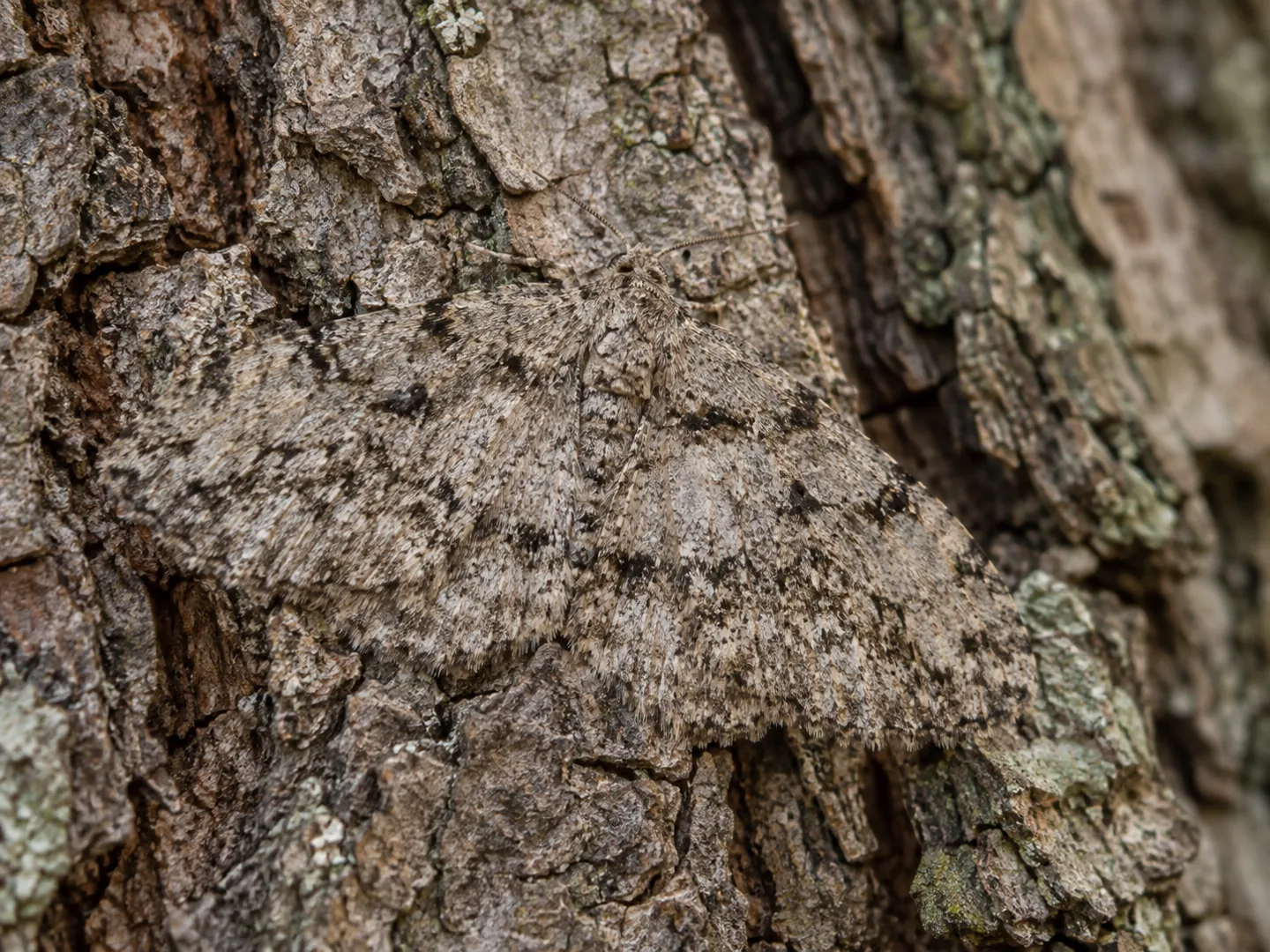
Biologists call it disruptive colouration: contrasting marks that break up an outline. Field tests with paper moths and birds, and screen tests with people, found marks touching the edge work best, as long as the colours also match the background.
EDGES are what give a shape away
Check a patternTHE SHORT ANSWER
Shapes are recognised by their outlines.
Good patterns blur where the outline is.
EDGES
In Bristol's field test, paper moths with markings overlapping their edges survived better than all the other designs, including plain ones.
Check a patternMATCHING
A 2007 follow-up found disruptive moths whose colours did not match the background had the lowest survival of all, so the pattern alone is not enough.
See the numbersDAZZLE
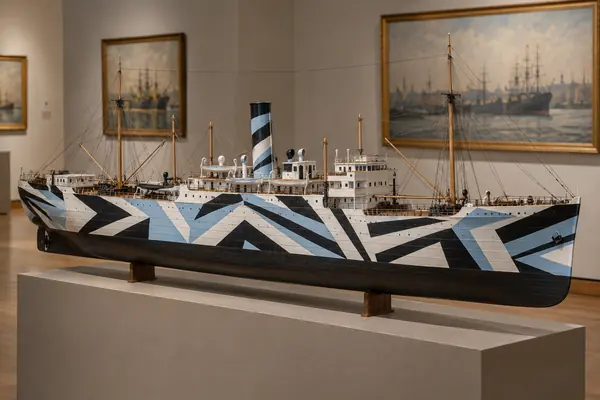
Dazzle-painted ships were not meant to vanish. Bold stripes broke up the ship's form to confuse anyone judging its course.
Spot the tricks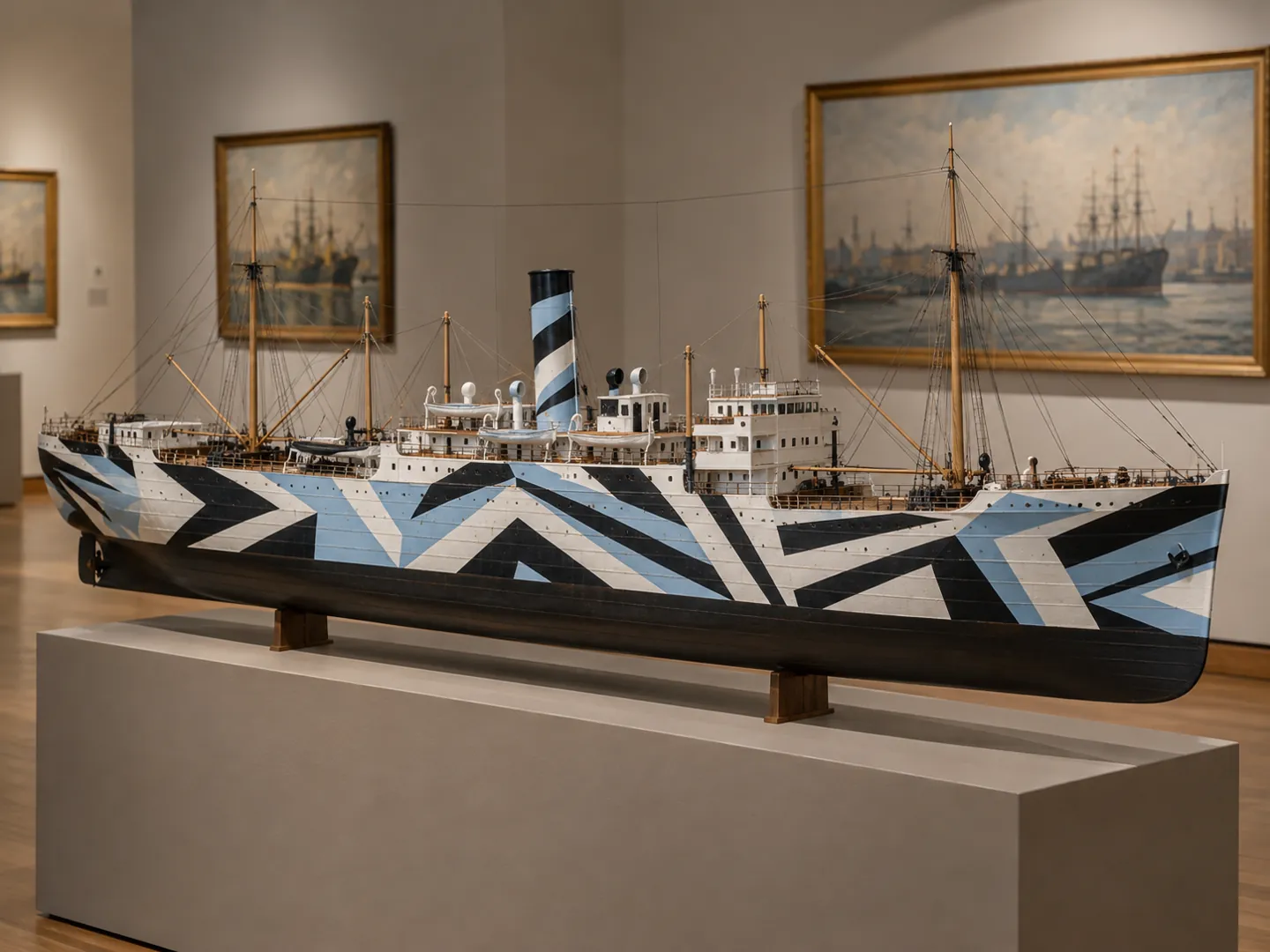
FOUR THINGS TO LOOK FOR
Whether it is a moth on bark or a printed jacket, the same features decide how well a pattern hides a shape.
Do dark marks run off the border? In the experiments, marks overlapping the edge hid shapes best.
Do the colours match where it will be seen? Non-matching disruptive patterns did worst in 2007.
Disruptive patterns use high-contrast marks that create false boundaries and hide real ones.
Some patterns hide the object; dazzle aimed to hide its direction and shape instead.
TWO NUMBERS WORTH KNOWING
A field test with real predators,
then a computer game with volunteers.
24 hours
Hours the paper moths stayed on the trees
Cuthill's team pinned card 'moths' with a mealworm to oak trees and checked their survival over 24 hours. Better disguises took longer to be found by birds.
FIELD TEST · BRISTOL 2005
81
Volunteers who hunted moths on screen
In a follow-up, 81 volunteers searched photos of oak bark with 5 seconds per scene. Edge-marked moths were found least often and took longest to find.
SCREEN TEST · 2007
Bristol called its 2005 study the first experimental evidence that birds can be deceived by camouflage in the same way that humans are.
A QUICK PATTERN CHECK
Pick a pattern tested on artificial moths to see how it did. The bar shows how well it avoided being found in the experiments.
Based on Cuthill et al. (2005), as reported by the University of Bristol and summarised by Fraser et al. (2007).
DAZZLE AT SEA
In 1917 the marine artist Norman Wilkinson proposed painting ships not for low visibility but to break up their form, so an observer would misjudge the course. Royal Museums Greenwich notes the patterns were asymmetric, not the same on both sides.
Smithsonian Magazine reports that Wilkinson's team showed King George V a painted model through a periscope; the King, a former naval officer, judged its course as south by west when it was east-southeast.
Questions
High-contrast markings that create false boundaries or hide real ones, making a shape harder to recognise. Many animals have them, from insects to fish and mammals.
A 2005 University of Bristol field study gave the first experimental evidence that birds are deceived by camouflage in the same way as humans, using printed card moths on trees.
Not always. A 2007 study found bold disruptive moths whose colours did not match the background had the lowest survival of all the types tested.
A First World War idea from the artist Norman Wilkinson: ships painted with bold, contrasting zig-zag patterns to break up their form and confuse observers about their course.
Royal Museums Greenwich says dazzle camouflage was asymmetric, not the same on both sides of a vessel, as one painting in its collection shows.
Updated
ABOUT THIS NAME
techwearprints.com is part of the DoodleSale portfolio. It isn't in an auction right now, but you can ask about leasing it.